4 min read
A new beginning for displaced children in Mexico
Violence forced Christian families from their homes in southeast Mexico. But thanks to local believers and support from Open Doors partners, hope is returning.
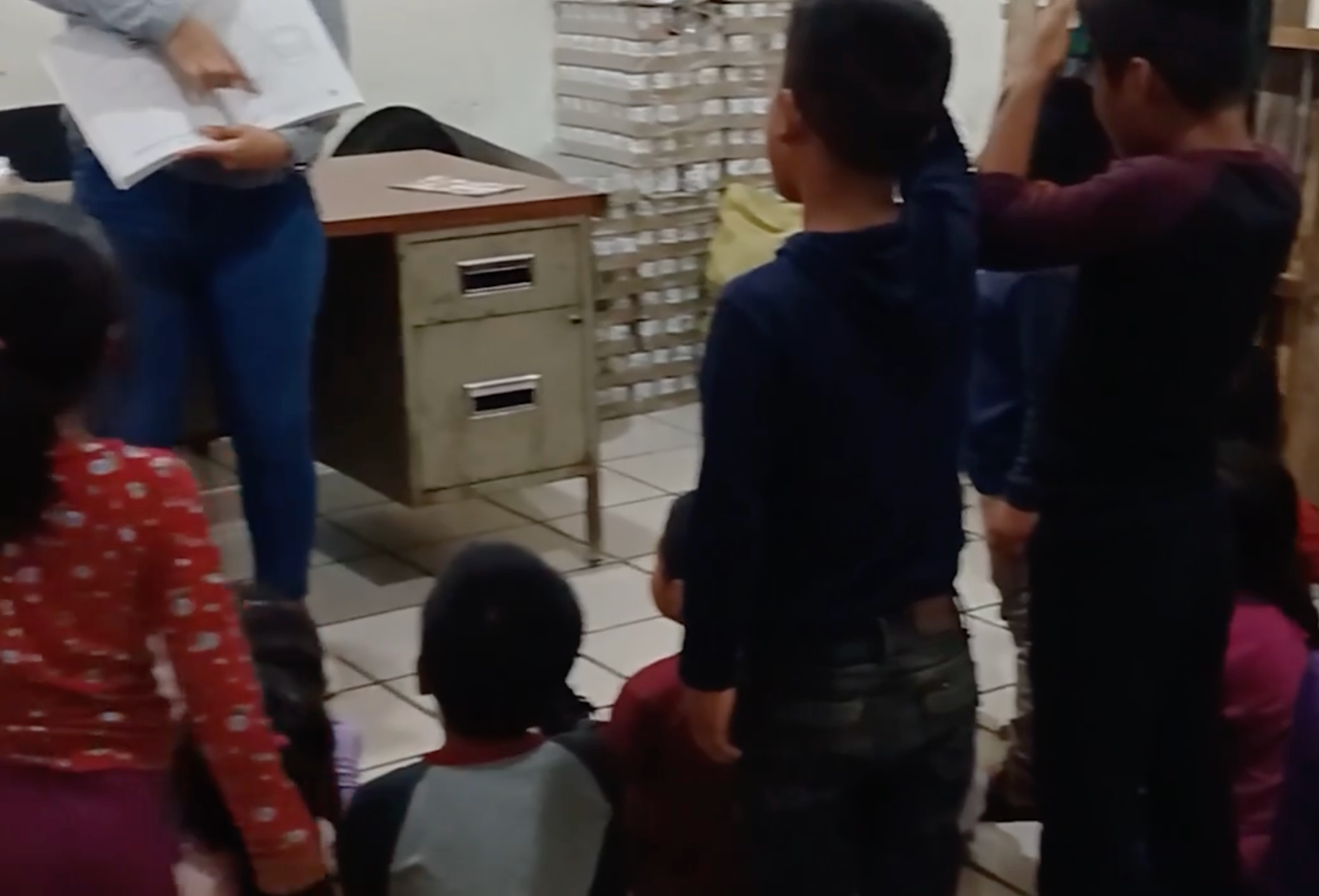
“Eight. Nine. Ten. Very good.”
The teacher's encouraging voice fills a makeshift classroom in southeast Mexico as children practice counting aloud.
It's a simple, joyful moment—one that could take place in almost any classroom around the world. But for these children, the opportunity to learn is anything but ordinary.
For years, persecution and displacement interrupted their education, leaving parents wondering whether their children would ever return to school.
Today, those same children are counting, learning and smiling again.
For Noe,* seeing his children learn the alphabet and count is answered prayer.
“My kids are in preschool, and they already know the alphabet and how to count,” he shares. “Before, they didn’t even know how to draw.”
For many parents, watching their children return home smiling after school is an ordinary part of life. But for Noe, it's a reminder of how far his family has come—and how God has provided hope amid hardship.
Everything left behind
In 2024, Noe and more than 100 other Christians were forced to flee their Indigenous community in southeast Mexico after refusing to cooperate with a criminal gang.
Leaving meant abandoning their homes, livelihoods and everything familiar. For the children, it also meant leaving their schools behind.
The displaced families eventually found shelter in a neighboring community, but their struggles were far from over. For months, they lived in overcrowded conditions, facing uncertainty as they searched for work, food and a safe place to sleep.
Amid these daily challenges, another concern weighed heavily on parents like Noe: their children's education.
Without access to school, the children were missing out on opportunities to learn and grow. And with no clear path toward returning home, their parents could only wonder what the future might hold.
But even in these difficult circumstances, their story was far from over.
Streams in the desert
When Open Doors partners learned about the displaced families' situation, they stepped in to provide emergency assistance.
As they connected with families, they realized that helping them rebuild their lives meant looking beyond immediate needs. Their children needed the opportunity to continue learning.
“We knew we couldn't stand by,” says Open Doors partner Alma Ávila,* the project leader. “We knew it wouldn’t be easy, but we trusted God would make a way.”
That trust was followed by determination and action. Open Doors partners worked with local authorities and education officials to find a way for the children to resume their studies.
Eventually, teachers traveled to the shelter three days a week, bringing lessons directly to students.
“We set up makeshift classrooms inside the shelter and gave the children school supplies to help them get started,” Alma explains. “Seeing their smiles and hearing everyone come together to support them brought us so much joy. We thank God for opening a door that had seemed closed for so long.”
What had once seemed out of reach was becoming a reality.
A classroom filled with hope
In August 2026, 68 children completed their school year. Two teenagers even graduated from high school.
For these children, the milestone represented more than learning the alphabet or practicing their numbers. It meant regaining an important part of childhood that conflict and displacement had taken away.
And for their parents, it offered something equally precious: renewed hope for their children's future.
Noe sees that every time his children come home from class: “I'm happy watching my children return with a smile,” he says.
Looking toward the future
Still, for Noe and the other displaced Christian families, challenges remain.
Teachers can reach the shelter only three days a week, and insecurity sometimes prevents them from traveling. Illness also keeps some children from attending classes.
But their return to school is an encouraging step forward.
What began with a group of families facing an uncertain future has become a testimony to what can happen when God’s Church is willing to step into the lives of His people.
And for Noe, the impact can be seen in something simple: his children are learning and looking toward the future.
“I want them to study for the rest of their lives, for as long as they can—until they are adults and can decide for themselves whether they want to continue,” he says.
Perhaps the clearest picture of that hope is found in the voices of the children themselves.
“Who wants to try it alone?” the teacher asks.
Several children wave their hands, shouting, “Me, me, me, me!”
After years of being kept out of the classroom, these children are finally getting their chance to learn.
*Names changed for security reasons.